Folate
Folate (vitamin B-9) is important in red blood cell formation and for healthy cell growth and function. The nutrient is crucial during early pregnancy to reduce the risk of birth defects of the brain and spine.
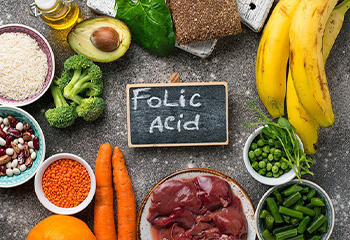
For the majority of the population, folic acid and folate are the same things a nutrient found in food and prenatal vitamins that helps prevent neural tube defects in babies. While the terms are often used interchangeably, there is an important distinction between the two. Folate is a B vitamin found in foods like dark leafy greens, lentils, beans, eggs, sunflower seeds, and liver. Folic acid is the synthetic form of folate. It is only found in fortified foods and supplements and must be converted to the active form within the cell. Humans are unable to make their folate, so we have to get it from food or supplements.
What is the benefit of folate?
Folate helps the body make healthy red blood cells and is found in certain foods. Folic acid is used to: treat or prevent folate deficiency anemia. help your unborn baby’s brain, skull, and spinal cord develop properly to avoid development problems (called neural tube defects)
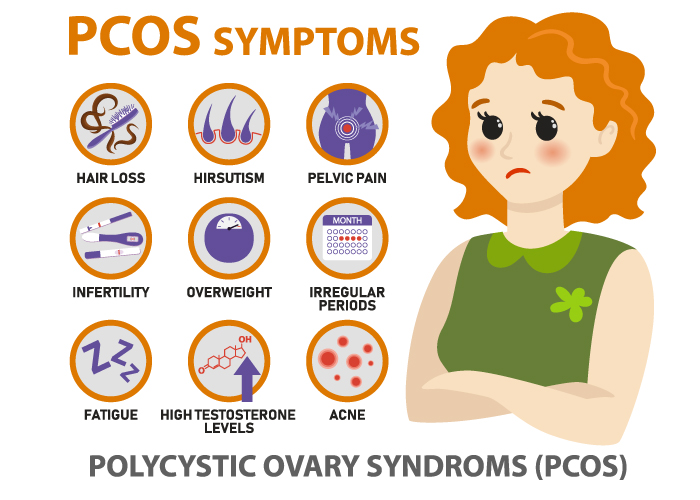
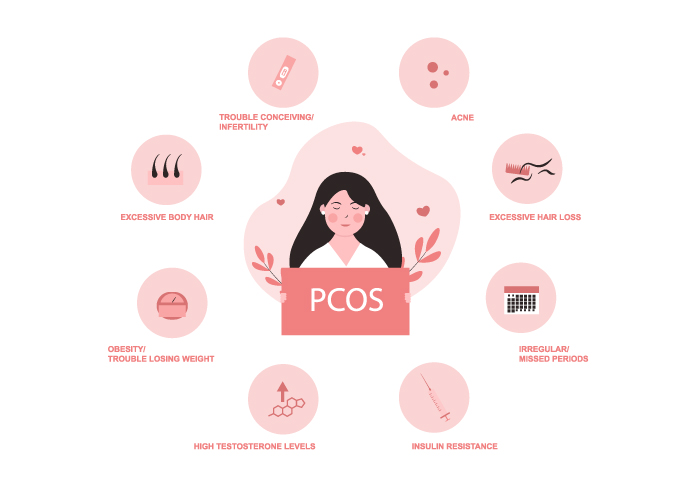
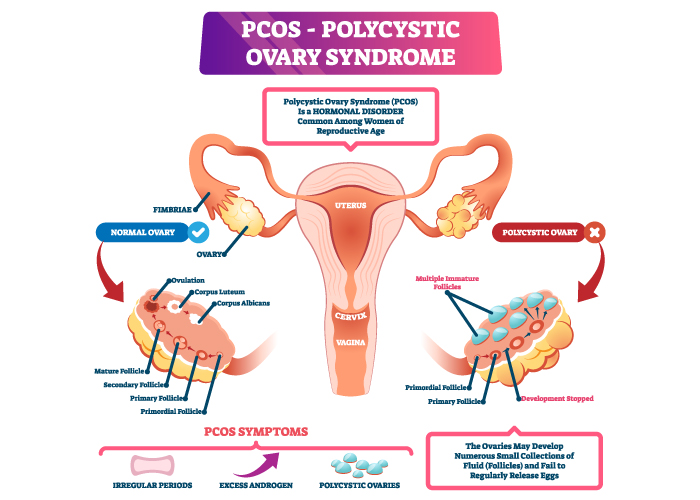
Folate and PCOS
A recent study showed that folate, the active form, has beneficial effects on metabolic profiles in women with PCOS. The study was a randomized controlled trial, considered the “gold standard” of research. In the study, 5 mg of folate supplementation, compared with 1 mg and a placebo, resulted in better glucose metabolism and better cholesterol lab values in women with PCOS.
The average prenatal vitamin has between 600-1000mcg (1 mg) of folic acid or folate, so to reach 5 mg another supplement may be needed. While there is little risk associated with folate supplementation.
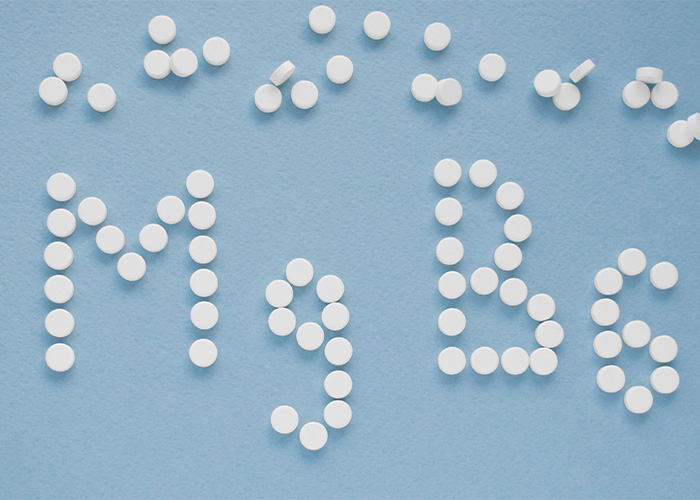
Magnesium
Magnesium helps balance fertility hormones progesterone and estrogen. Magnesium controls follicle-stimulating hormone, or FSH, because estrogen-dependent on magnesium status, and FSH is the hormone that stimulates the ovaries
improve several aspects of your health, such as bone strength, mood, immunity, blood sugar regulation, and sleep quality.
The recommended dietary allowance for magnesium for adult men is 400-420 mg per day. The dietary allowance for adult women is 310-320 mg per day.
Magnesium Citrate
Magnesium citrate is one of the most popular and easily absorbed magnesium supplements.
Zinc
A study from Pennsylvania State University presented last month at the American Physiological Society annual meeting concluded that zinc deficiency can have a negative effect on egg development.
It plays a role in oocyte division, fertilization, DNA regulation, and embryo development.
Women trying to get pregnant should think about zinc in their and their partner’s diet, but they should be thinking about their whole diet and other health factors as well. “Zinc” is only one important piece of the puzzle.
The recommended daily allowance for zinc is 8 milligrams per day for adult women and 12 milligrams per day during pregnancy and lactation.
Hester notes that women trying to conceive can take the higher amount, but they should be cautious because too much zinc can interfere with copper absorption and metabolism.
The benefit of inopregna
Inositol supplements may improve PCOS symptoms, particularly when combined with folic acid. For instance, clinical studies suggest that daily doses of inositol and folic acid may help reduce levels of triglycerides in the blood.
- Help improve polycystic ovary syndrome
- Prevent Diabetes During Pregnancy
- Female fertility and reproductive wellness
- Support regular menstrual cycles
- normal egg quality
- promotes female hormonal balance
- with desirable taste (Orange flavor(
uses:
use one suchet daily preferably after breakfast or dinner as directed by your physician.
Reference:
- Azziz R., Carmina E., Dewailly D., Diamanti-Kardarakis E., Escobar-Morreale H.F., Futterweit W., Janssen O.E., Legro R.S., Norman R.J., Taylor A.E., et al. Positions statement: Criteria for defining polycystic ovary syndrome as a predominantly hyperandrogenic syndrome: An Androgen Excess Society guideline. J. Clin. Endocrinol. Metab. 2006;91:4237–4245. DOI: 10.1210/jc.2006-0178. – DOI – PubMed
- Effect of inositol on bulimia nervosa and binge eating
D Gelber 1, J Levine, R H Belmaker
Affiliations expand PMID: 11262515 DOI: 10.1002/eat.1028
- Myo-inositol rather than D-chiro-inositol can improve oocyte quality in intracytoplasmic sperm injection cycles. A prospective, controlled, randomized trial
Under 1, G Carlomagno, P Rizzo, E Raffone, S Roseff Affiliations expand PMID: 21608442
4. Inositol phospholipids and cell surface receptor function
R H Michell PMID: 164246 DOI: 10.1016/0304-4157(75)90017-9
- Bailey LB, Caudill MA. Folate. In: Erdman JW, Macdonald IA, Zeisel SH, eds. Present Knowledge in Nutrition. 10th ed. Washington, DC: Wiley-Blackwell; 2012:321-42.
- Institute of Medicine. Food and Nutrition Board. Dietary Reference Intakes: Thiamin, Riboflavin, Niacin, Vitamin B6, Folate, Vitamin B12, Pantothenic Acid, Biotin, and Choline. Washington, DC: National Academy Press; 1998.